
Knowledge Base / Frequently Asked Questions / Room Alert Monitors (PRO, MAX, and Legacy)
During a firmware update on a Room Alert 32S, 12S or 3S, your system communicates with your device using a combination of standard network traffic and a high volume of UDP packets.
The update process includes the following steps:
| Step | Protocol |
|---|---|
| 1. Discover the device on the network | UDP |
| 2. Unlock the device’s firmware update mode | HTTP or HTTPS |
| 3. Transfer firmware data to the device | Rapid UDP or HTTP/HTTPS (device dependent) |
| 4. Verify and completing the update | UDP and/or HTTP/HTTPS |
The actual firmware transfer process may generate a rapid burst of UDP traffic while firmware data is being transmitted to the device; this behavior is expected and is required to complete the update. Because firmware updates involve direct low-level communication with the hardware, the traffic pattern can look unusual compared to normal web browsing or office applications.
When HTTPS is enabled, communication between the utility and the device is encrypted and requires additional negotiation and validation steps.
This can introduce:
In environments with strict endpoint protection, deep packet inspection, or advanced firewall policies, HTTPS-enabled communication is more likely to experience interruptions during the firmware update process.
Many modern security platforms are designed to detect behavior commonly associated with malicious activity, including high-rate UDP traffic, unexpected device-to-device communication, and repeated packet transmissions. As a result, some security products may rate-limit packets, modify packet headers in transit, drop UDP traffic, interrupt the firmware transfer, or terminate the update entirely.
Examples of software that may affect updates include:
In some environments, the security software may interpret the firmware transfer as suspicious network activity or a flooding event.
The traffic generated during the firmware update process is expected behavior required to transfer firmware data to the device; however, because the transfer involves rapid UDP communication, some security systems can classify the activity as suspicious unless appropriate exceptions are configured.
If updates are failing consistently, we recommend:
Your IT or security administrator may need to explicitly allow this traffic if aggressive filtering or flood protection is enabled.


We'd love to talk with you about your monitoring needs. Contact one of our Product Specialists for a free consultation.


You may find Windows Command Prompt at the following path:
To run Windows Command Prompt as an administrator:
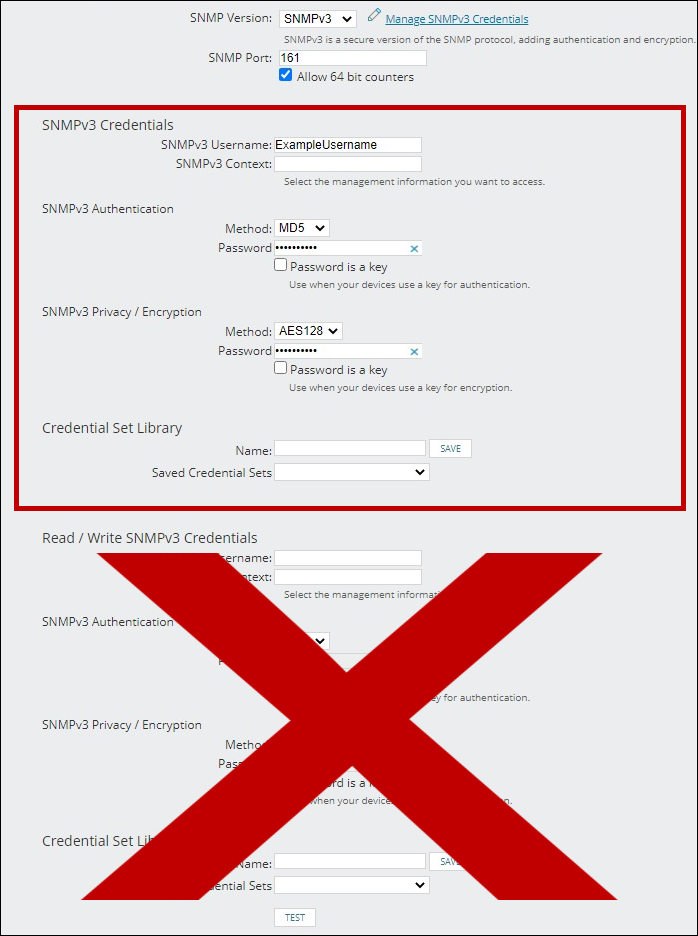
If you are using this client, you should configure the general SNMPv3 Credentials, but leave the Read / Write SNMPv3 Credentials section blank.

| Current S models | Current E models |
|---|---|
| Room Alert 32S | Room Alert 32E |
| Room Alert 12S | Room Alert 12E |
| Room Alert 3S | Room Alert 4E |
| Room Alert 3E | |
| S models | E & W models |
|---|---|
| Room Alert 32S | Room Alert 32E |
| Room Alert 12S | Room Alert 12E |
| Room Alert 3S | Room Alert 4E |
| Room Alert 3E | |
| Room Alert 3W |
| Model |
|---|
| Room Alert MAX |
| Room Alert 32S |
| Room Alert 12S |
| Room Alert 3S |
| Room Alert 32E/W |
| Room Alert 12E |
| Room Alert 4E |
| Room Alert 3E |
| Room Alert 3 Wi-Fi |