Knowledge Base / News / Facilities / Warehouses
A news report detailing flooding damage in a brand-new, multi-million dollar high school recently captured attention for a sobering reason. The massive financial cost and disruption stemmed not from a structural defect or complex mechanical failure, but from a single hose inadvertently left running.
This type of story, common as it is unexpected, should resonate deep within the facility management, risk assessment and insurance communities. It illustrates the paradox that defines modern operational risk. Even the most sophisticated, state-of-the-art facilities remain critically vulnerable to the most persistent, simplest flaw, which is a lapse in human attention.
In complex systems, we often focus our protective resources on high-impact, low-frequency events, like catastrophic equipment failure. However the true, daily threat is the low-impact, high-frequency human error that goes unnoticed.
The problem isn’t the error itself. Human beings are fallible. The problem is the lack of timely detection. A single forgotten valve or an unlatched door when allowed to persist over time, especially during unattended periods like weekends or holidays, leverages the building’s complexity (including plumbing, HVAC and fire systems) to amplify the damage exponentially.
The resulting cost isn’t just remediation. It includes high-value losses from water damage to sensitive IT equipment, business interruption (or, in the case of a school, educational disruption) and elevated insurance premiums. It is the compounding effect of time acting upon an unchecked mistake that transforms a simple oversight into a massive operational failure.
There is a dangerous complacency that surrounds new construction. The assumption that new building codes, quality materials and warranties negate the need for rigorous operational scrutiny is a critical flaw.
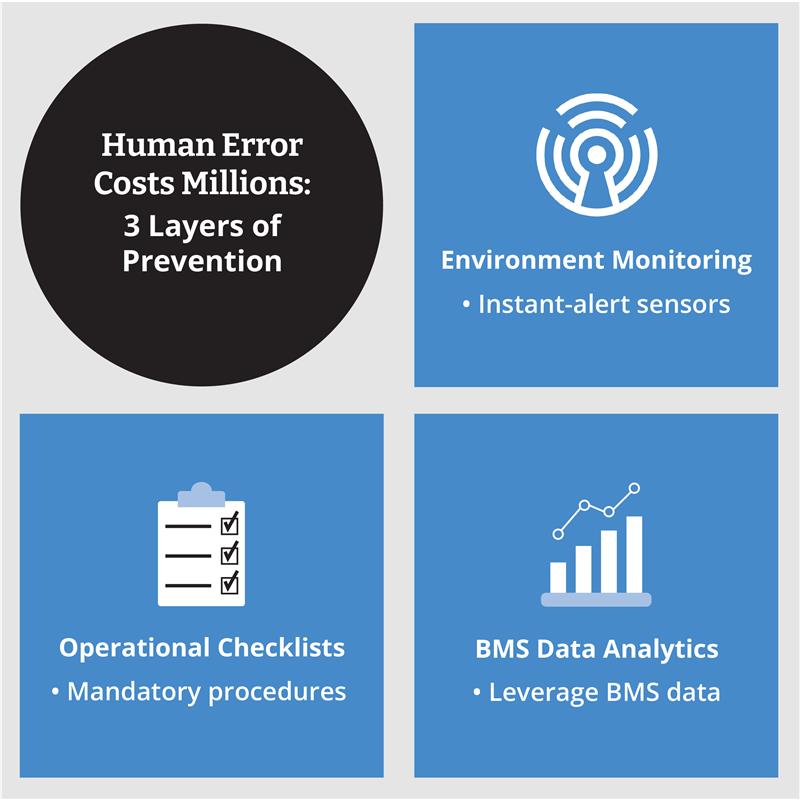
The truth is, oversight must be as state-of-the-art as the building itself. A new facility needs protection against two main failure points:
When an operational mistake occurs, the system must have an automated failsafe. This is where the integration of proactive environment monitoring becomes non-negotiable.
Organizations can no longer afford to rely solely on manual checks or personnel presence to prevent catastrophic damage. It is a fundamental responsibility of risk management to deploy technology that can bridge the human gap.
If your facility, new or old, lacks real-time, automated environment-related detection in critical areas, you are actively choosing to expose your assets to maximum preventable loss.
Don’t wait for a viral news story about your own catastrophic oversight. Audit your human error vulnerabilities, integrate Room Alert monitoring systems and close your proactive gap today. Email us at Sales@RoomAlert.com to learn more!


We'd love to talk with you about your monitoring needs. Contact one of our Product Specialists for a free consultation.


You may find Windows Command Prompt at the following path:
To run Windows Command Prompt as an administrator:
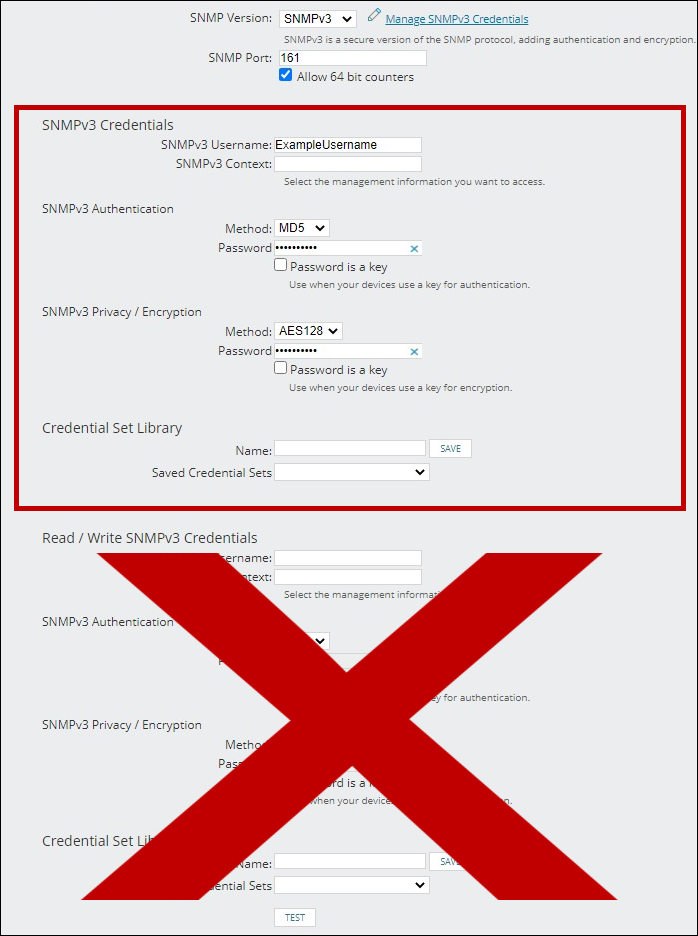
If you are using this client, you should configure the general SNMPv3 Credentials, but leave the Read / Write SNMPv3 Credentials section blank.

| Current S models | Current E models |
|---|---|
| Room Alert 32S | Room Alert 32E |
| Room Alert 12S | Room Alert 12E |
| Room Alert 3S | Room Alert 4E |
| Room Alert 3E | |
| S models | E & W models |
|---|---|
| Room Alert 32S | Room Alert 32E |
| Room Alert 12S | Room Alert 12E |
| Room Alert 3S | Room Alert 4E |
| Room Alert 3E | |
| Room Alert 3W |
| Model |
|---|
| Room Alert MAX |
| Room Alert 32S |
| Room Alert 12S |
| Room Alert 3S |
| Room Alert 32E/W |
| Room Alert 12E |
| Room Alert 4E |
| Room Alert 3E |
| Room Alert 3 Wi-Fi |