Knowledge Base / News / Facilities / Warehouses
While IT budgets prioritize logic-based security and cloud-native redundancy, Uptime Institute confirms that nearly 30% of all unplanned outages stem from environmental factors. Even the most resilient software architecture is at the mercy of its physical environment.
Even the most resilient software architecture is at the mercy of its physical environment. Here are the five physical vectors that define the boundary between 99.999% uptime and a total site failure.
Cooling failure isn’t a slow process; it’s a race against thermal inertia. In a high-density rack, the transition from “operational” to “critical” often occurs in under 15 minutes.
Humidity is a “Goldilocks” variable. In a server environment, any deviation from the ASHRAE-recommended range of 40% to 55% creates a specific hardware-level risk.
Most liquid-related outages are not the result of natural disasters but indoor events. Because data centers often utilize raised flooring, water from HVAC condensation lines or plumbing leaks can pool undetected for hours.
The primary danger is the wicking effect. This is where moisture climbs up vertical cabling into Power Distribution Units (PDUs), turning a localized leak into a rack-wide short circuit.
———————
Room-level readings often miss what’s happening at the rack. Temperature and humidity drift faster than you think. Real resilience starts with real-time visibility into temperature, humidity, power, and airflow before thresholds are breached.
Get a Quote here
No obligation · Built for server rooms and critical environments
———————
An Uninterruptible Power Supply (UPS) is a timer, not a solution. Recent industry surveys from the Ponemon Institute indicate that battery failure is the #1 cause of UPS-related downtime.
The primary risk during a power event is the uncontrolled shutdown. When a UPS exhausts its battery without a graceful power-down, it risks database corruption and dirty restarts. Resilience requires telemetry that bridges the gap between power loss and automated shutdown scripts, ensuring data is parked before the batteries hit 0%.
A room can be cold while a server is melting. This is the reality of hot spots. Poor cable hygiene or a failed internal rack fan can create pockets of stagnant air.
In these micro-climes, heat builds up locally despite the ambient cooling of the room. Monitoring the differential between intake and exhaust air is the only way to ensure that cooling is actually moving through the hardware rather than just circulating around the room.
The shift from reactive to proactive infrastructure management requires visibility into these physical blind spots. Room Alert bridges the telemetry gap by providing real-time data across these five vectors.
Room Alert provides the hardware and software layer needed to monitor these five vectors. From digital temperature sensors that track ASHRAE guidelines to active power sensors for graceful shutdowns, our platform provides the visibility required for modern uptime.
Explore the Room Alert ecosystem at RoomAlert.com


We'd love to talk with you about your monitoring needs. Contact one of our Product Specialists for a free consultation.


You may find Windows Command Prompt at the following path:
To run Windows Command Prompt as an administrator:
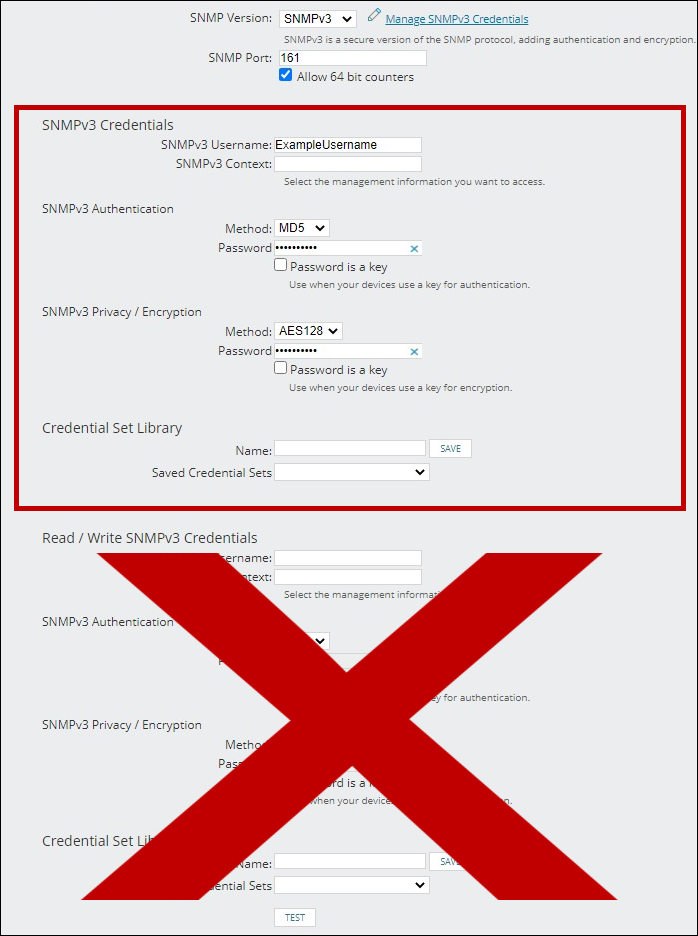
If you are using this client, you should configure the general SNMPv3 Credentials, but leave the Read / Write SNMPv3 Credentials section blank.

| Current S models | Current E models |
|---|---|
| Room Alert 32S | Room Alert 32E |
| Room Alert 12S | Room Alert 12E |
| Room Alert 3S | Room Alert 4E |
| Room Alert 3E | |
| S models | E & W models |
|---|---|
| Room Alert 32S | Room Alert 32E |
| Room Alert 12S | Room Alert 12E |
| Room Alert 3S | Room Alert 4E |
| Room Alert 3E | |
| Room Alert 3W |
| Model |
|---|
| Room Alert MAX |
| Room Alert 32S |
| Room Alert 12S |
| Room Alert 3S |
| Room Alert 32E/W |
| Room Alert 12E |
| Room Alert 4E |
| Room Alert 3E |
| Room Alert 3 Wi-Fi |